For the child who will not sit down with schoolwork

Lessons they will actually open

Personalised lessons for autistic and ADHD kids, built around what they love, all written to the Australian Curriculum.

Families already do their whole school week with us.

Sound familiar?

Your child can learn. They need the way of learning that fits them.

What it looks like

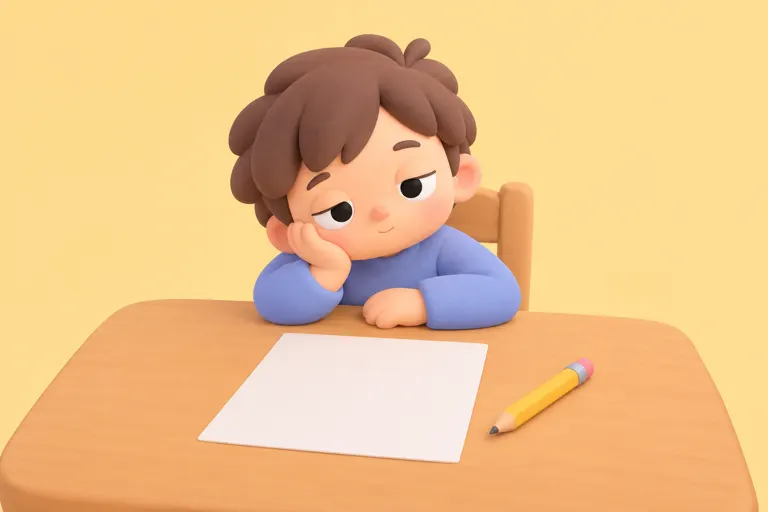
  • A boy at a table, chin in his hand, looking past a blank worksheet.Bored.Everything is boring, or too hard.
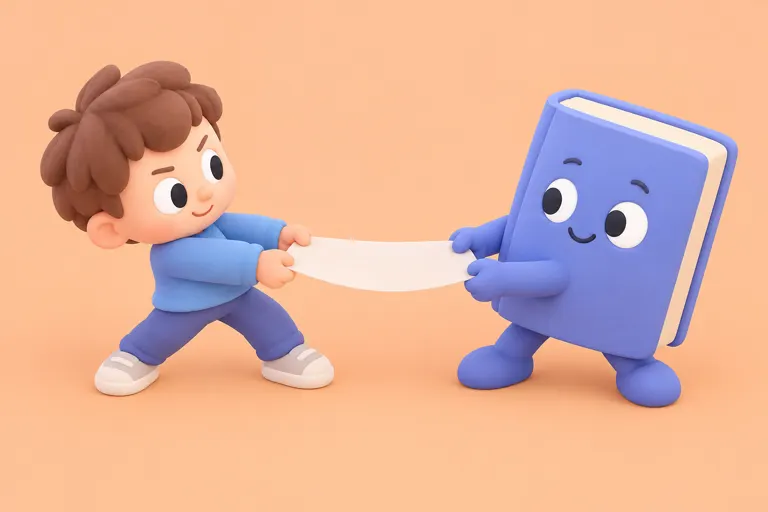
  • A boy and a book with a face pulling on the same worksheet in a tug of war.Battles.Every lesson turns into a fight.
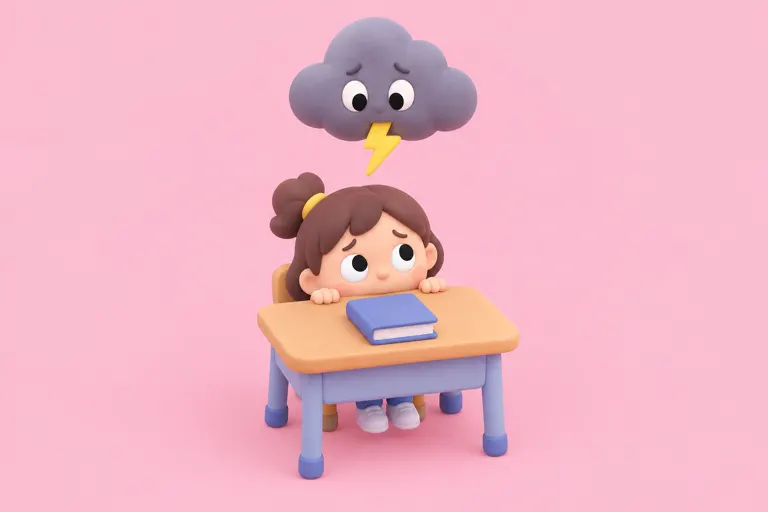
  • A girl peeking over her desk at a book, with a small storm cloud above her.Meltdowns.Before the work even starts.
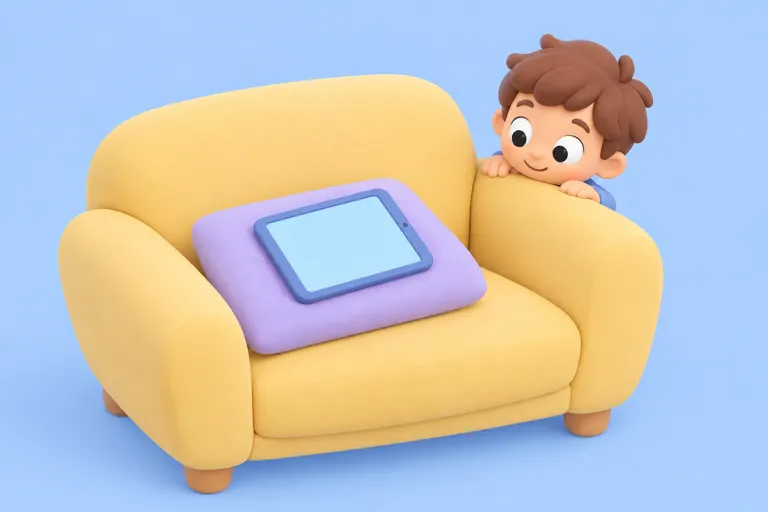
  • A boy peeking over the arm of a couch at a tablet on a cushion.Screens.They'd rather be on one, and it's hard to blame them.
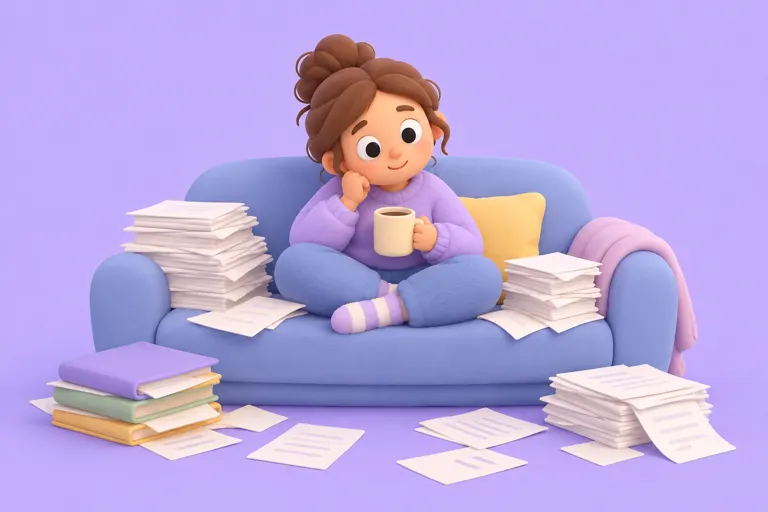
  • A parent on the couch with a cup of tea, surrounded by piles of paper.Worn out.And it all lands on you.

What's often behind it

  • It isn't taught the way their brain works: sit still, fill in the worksheet, write it out.
  • Dyslexia makes reading and writing hard work, so they avoid anything that needs it.
  • A gap nobody spotted, so each new step sits on a shaky one.
  • Being told what to do sets off a no.
  • Nothing in it connects to what they love, so it feels pointless.
  • OCD makes some tasks painful to get through.
  • Every lesson feels the same, and their brain needs something new.
  • The pace is wrong, too fast or too slow.

The problem isn't your child. It's the fit.

How it works

Learning built around one child used to be rare and costly. We make it for every family.

A real person works with your family from the first chat.

  1. We get to know your child and your family

    A long chat about what they love, what's hard and how your week runs. Then a light check of where they're at.

  2. We build it in the format that fits

    Engaging lessons, projects or real world activities, on paper or on screen, at their pace and covering the Australian Curriculum.

  3. We keep checking the fit

    When they learn on screen, their learning team sees how engaged they are and how effective the learning is. So everyone knows what's working, lesson to lesson, and the next lesson gets updated to match.

You choose how involved you are. Leave it with us, or make and change lessons yourself.

80% fewer meltdowns over reading, in six weeks.

One of our founding families, first 6 weeks. Also:

  • First lesson done alone, start to finish, with no parent
  • Calls one of the story characters "my friend"
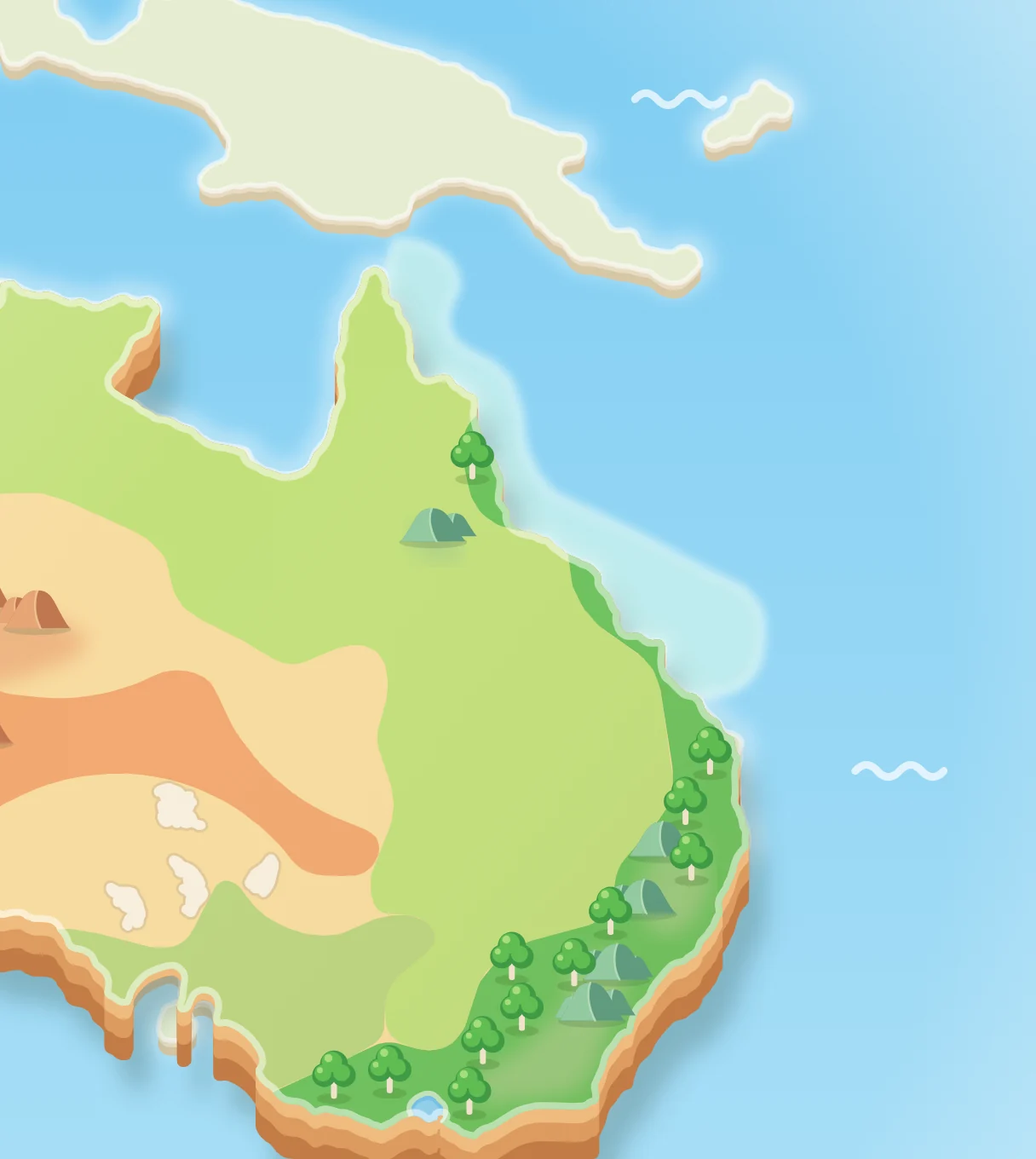
A map of Australia and Papua. A trail runs from Papua, done, down the east coast to the Snowy Mountains, next.
His character, a boy in a space helmet, partway down the trail.
The copper mine in PapuaPapua

A real lesson

Here's a real lesson, built for one child.

He loves adventure, so his lessons are a trip around the world.1 Each stop is a story with a problem, and the lesson is how he solves it. Here are two of his stops.

He drew his own character, so he is the hero of every story.

The copper mine in PapuaPapua

Is copper rubbish?

Summary: a 15 minute lesson, told in under a minute
Listen
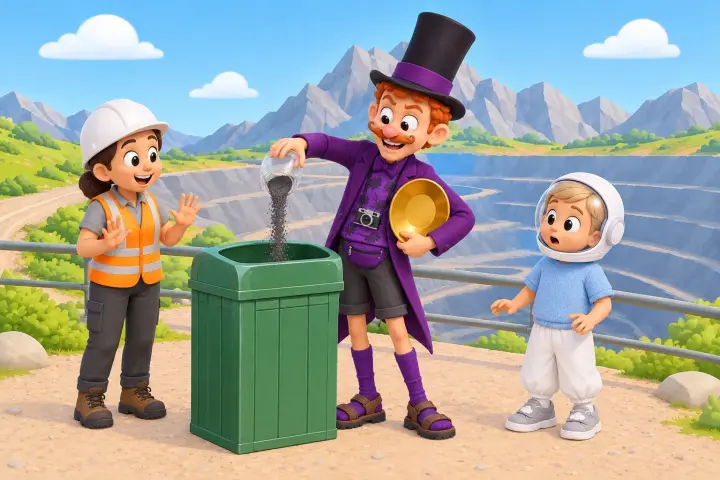
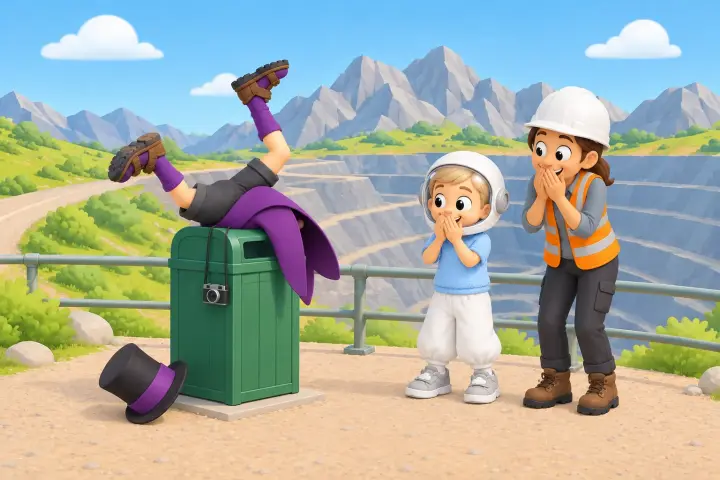
At the mine lookout, Mr Sneakenhausen grins and tips the jar of dark powder into an open green bin. The geologist and the explorer look surprised.
The story

You are at a giant mine in Papua. A geologist shows you a jar of copper powder. But the villain, Mr Sneakenhausen, is here too.

“Copper? Brown, boring, and everywhere. Gold is treasure. Copper is rubbish!”

And he tips it into the bin.

Start exploration
Listen
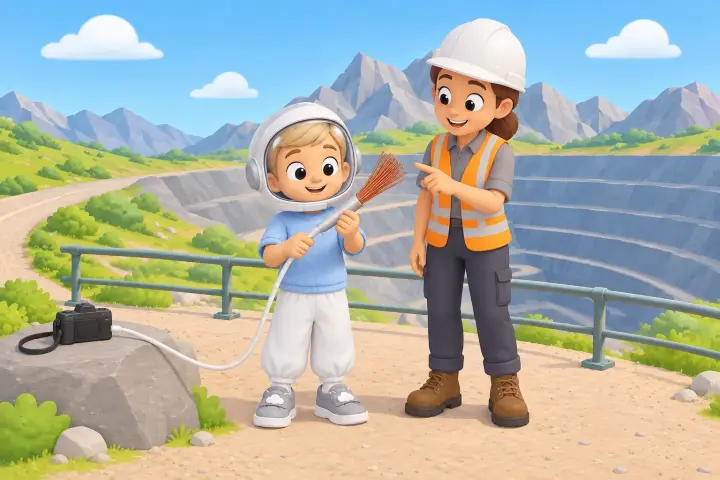
The explorer holds Mr Sneakenhausen’s camera cord with its end peeled back, showing a fan of shiny copper wires. The geologist points at the copper.
Learn

Is copper rubbish? Peel open Mr Sneakenhausen's camera cord: inside is shiny copper wire, carrying the electricity. Copper is in the wires in your walls, your phone and every car.

Next
Listen
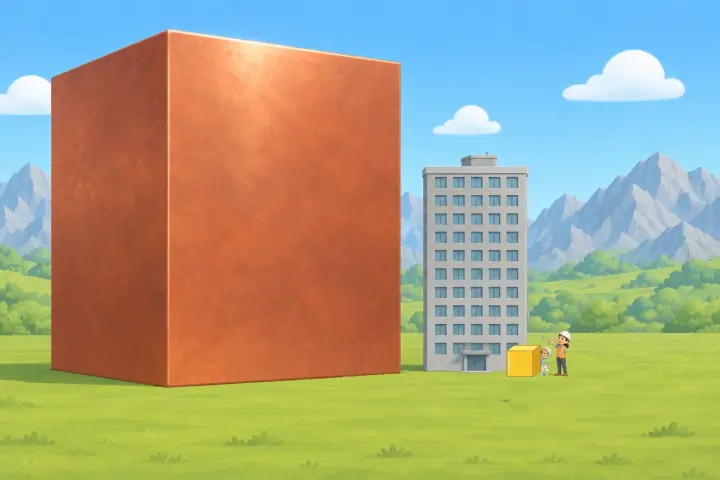
A giant copper block towers over a ten storey building. At the building door, the explorer and the geologist are tiny, beside a gold block only as tall as the explorer.
Learn

“In one year, this mine dug up about 53 tonnes of gold, and 680 thousand tonnes of copper.”

Gold is so rare it could never wire the world. Copper is common, so there is enough for every wire. Being common makes it useful.

Next
Listen
Mr Sneakenhausen has dived head first into the bin, legs kicking in the air, his top hat on the ground. The explorer and the geologist try not to laugh.
The resolution

“Copper is treasure? My copper!”

So in he dives, head first, to get it back.

“Mine! All mine!”

Finish
  • Narrator
  • Mr Sneakenhausen (the villain)
  • Geologist
Snowy Mountains

What broke the rocks?

Snapshots from the real lesson
Listen
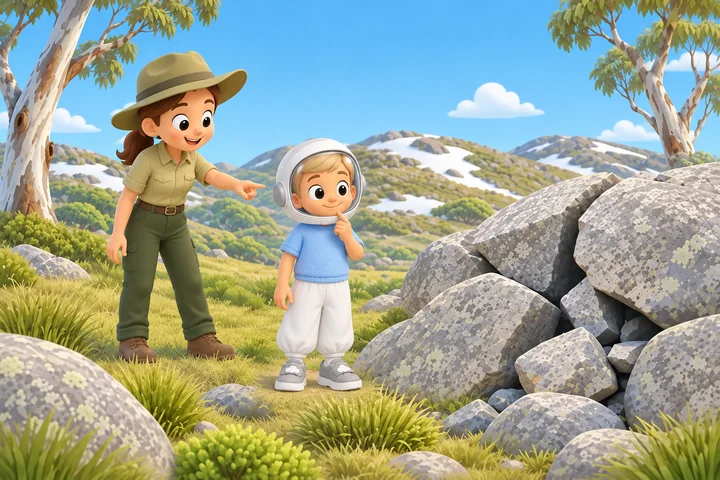
A ranger in a wide khaki hat points to a pile of broken grey rocks. Beside her, the boy in his space helmet thinks.
The story

But rock is very hard, and nobody watched these rocks break.

So how did these big rocks get broken into piles? The ranger asks if you can work it out.

Start exploration
Listen
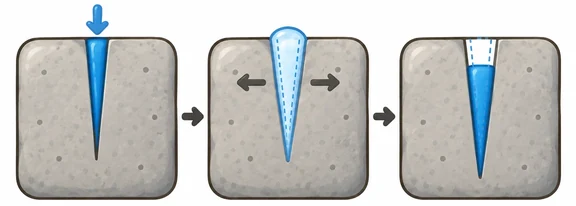
Three drawings of one rock: water runs into a crack, it freezes and pushes the crack wider, then it melts but the crack stays wider.
Learn

How ice cracks rock

Melted snow runs into a thin crack in a rock. On a cold night, the water in the crack freezes. The ice takes more room than the water did.

Next
Listen
Practise

One cold night is not enough to break a big rock. To answer it with the ranger, you need every step.

Drag the steps into order, first at the top.

Melted snow runs into a thin crack in the rock.On a cold night, the water freezes and pushes the crack wider.During the day, the ice melts, and the water runs further into the wider crack.After thousands of years of cold nights, the rock breaks into pieces in a pile.
Ask tutor
Check
Listen
A mountain pygmy-possum curled up asleep on dry grass in a gap between big grey rocks, with snow over the rocks above it.
The answer

Now you know how ice broke the rocks. The gaps between the broken pieces are where the possums sleep under the snow.

So ice made the possum's home.

Finish

Every lesson is screens he works through, read aloud as he goes.

What it costs

At school or at home, start with 2 free lessons.

Personalised lessons

Priced on a call

We shape a plan around what your family needs, and the price follows from it. We work it out with you on the first call.

  • We get to know your family's needs and plan with you.
  • Lessons and projects built around what they love, on screen, on paper or out in the real world.
  • You see what's working, and we change it fast.2
Request 2 free lessons

We work with a small number of families at a time. The first call is to see if we're a good fit for each other.

Registration plan

$89.95 per child

  • A plan for the whole year, written to your state's rules, as a Word document.
  • A free rewrite, then your money back, if your state refuses it.
What it includes

Free tools Free

  • A worksheet generator.
  • Notes and photos tagged with the curriculum outcomes they cover.
Sign up free
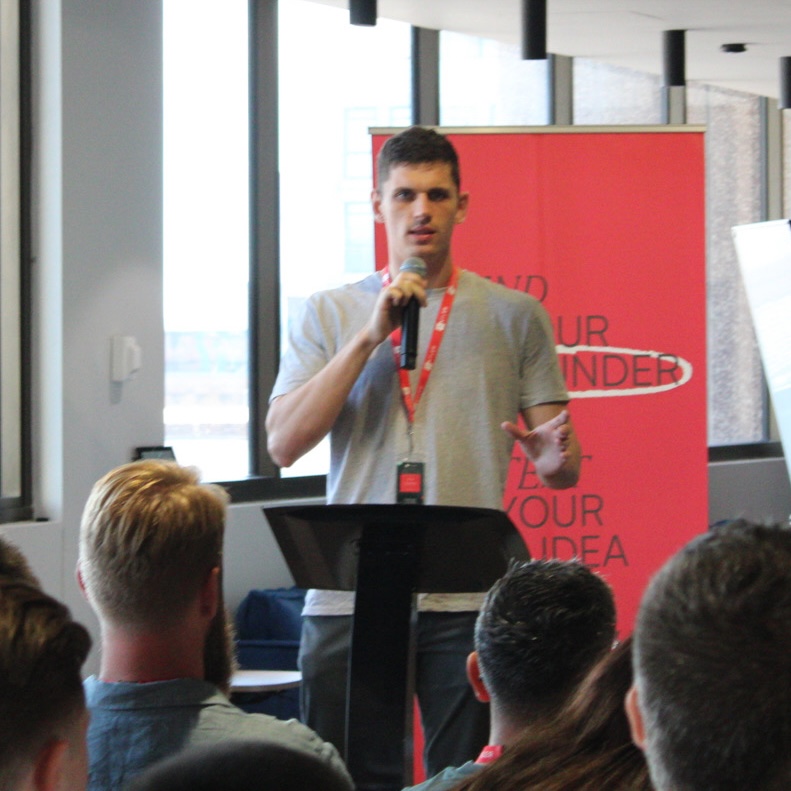
Ross speaking into a microphone at a lectern

Built by Ross

Came to Australia at 13 with no English, worked in corporate finance and as a software engineer, taught 150 students at university, and was diagnosed with ADHD as an adult. Read the full story

Our advisors

  • Dr Archana AkhauryFounder of Social SpectrumSocial SpectrumUniversity of MelbourneCisco
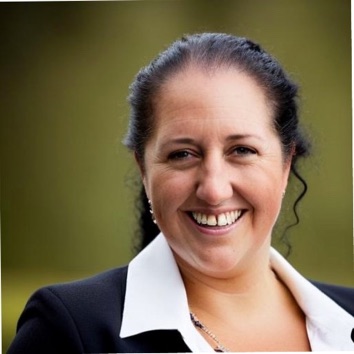
  • Brooke RichardsHealth and community services leaderBupaNorthcottUNSW
  • Arya KadakiaDigital health researcherDartmouth CollegeUW MedicineUNSW
More about our advisors
The research behind it
  1. Gunn and Delafield-Butt (2016). Teaching children with autism spectrum disorder with restricted interests: a review of evidence for best practice. Review of Educational Research, 86(2). doi.org/10.3102/0034654315604027
  2. Black and Wiliam (1998). Assessment and classroom learning. Assessment in Education, 5(1). doi.org/10.1080/0969595980050102

Further reading

More studies on the same ideas, for anyone who wants to read further.

Lessons built on what they love

  • Harrop et al. (2019). That's what I like: The use of circumscribed interests within interventions for individuals with autism spectrum disorder. A systematic review. Research in Autism Spectrum Disorders, 57. doi.org/10.1016/j.rasd.2018.09.008
  • Gruber, Gelman and Ranganath (2014). States of curiosity modulate hippocampus-dependent learning via the dopaminergic circuit. Neuron, 84(2). doi.org/10.1016/j.neuron.2014.08.060
  • Hidi and Renninger (2006). The four-phase model of interest development. Educational Psychologist, 41(2). doi.org/10.1207/s15326985ep4102_4

Stories

  • Mar, Li, Nguyen and Ta (2021). Memory and comprehension of narrative versus expository texts: a meta-analysis. Psychonomic Bulletin and Review, 28. doi.org/10.3758/s13423-020-01853-1
  • Arya and Maul (2012). The role of the scientific discovery narrative in middle school science education: An experimental study. Journal of Educational Psychology, 104(4). doi.org/10.1037/a0028108
  • Dahlstrom (2014). Using narratives and storytelling to communicate science with nonexpert audiences. Proceedings of the National Academy of Sciences, 111(Supplement 4). doi.org/10.1073/pnas.1320645111

Trying the problem first

  • Sinha and Kapur (2021). When problem solving followed by instruction works: evidence for productive failure. Review of Educational Research, 91(5). doi.org/10.3102/00346543211019105
  • Kapur (2008). Productive failure. Cognition and Instruction, 26(3). doi.org/10.1080/07370000802212669
  • Schwartz and Martin (2004). Inventing to prepare for future learning: The hidden efficiency of encouraging original student production in statistics instruction. Cognition and Instruction, 22(2). doi.org/10.1207/s1532690xci2202_1
  • Loibl, Roll and Rummel (2017). Towards a theory of when and how problem solving followed by instruction supports learning. Educational Psychology Review, 29(4). doi.org/10.1007/s10648-016-9379-x

Pictures with words

Hearing it read aloud

  • Wood, Moxley, Tighe and Wagner (2018). Does use of text-to-speech and related read-aloud tools improve reading comprehension for students with reading disabilities? A meta-analysis. Journal of Learning Disabilities, 51(1). doi.org/10.1177/0022219416688170
  • Buzick and Stone (2014). A meta-analysis of research on the read aloud accommodation. Educational Measurement: Issues and Practice, 33(3). doi.org/10.1111/emip.12040
  • Milani, Lorusso and Molteni (2010). The effects of audiobooks on the psychosocial adjustment of pre-adolescents and adolescents with dyslexia. Dyslexia, 16(1). doi.org/10.1002/dys.397

Explaining their thinking and tutoring

Remembering what they learnt

  • Roediger and Karpicke (2006). Test-enhanced learning: taking memory tests improves long-term retention. Psychological Science, 17(3). doi.org/10.1111/j.1467-9280.2006.01693.x
  • Adesope, Trevisan and Sundararajan (2017). Rethinking the use of tests: A meta-analysis of practice testing. Review of Educational Research, 87(3). doi.org/10.3102/0034654316689306
  • Agarwal, Nunes and Blunt (2021). Retrieval practice consistently benefits student learning: A systematic review of applied research in schools and classrooms. Educational Psychology Review, 33(4). doi.org/10.1007/s10648-021-09595-9
  • Rowland (2014). The effect of testing versus restudy on retention: A meta-analytic review of the testing effect. Psychological Bulletin, 140(6). doi.org/10.1037/a0037559
  • Cepeda et al. (2006). Distributed practice in verbal recall tasks: A review and quantitative synthesis. Psychological Bulletin, 132(3). doi.org/10.1037/0033-2909.132.3.354

Checking and adjusting

  • Hattie and Timperley (2007). The power of feedback. Review of Educational Research, 77(1). doi.org/10.3102/003465430298487
  • Wisniewski, Zierer and Hattie (2020). The power of feedback revisited: A meta-analysis of educational feedback research. Frontiers in Psychology, 10. doi.org/10.3389/fpsyg.2019.03087
  • Kluger and DeNisi (1996). The effects of feedback interventions on performance: A historical review, a meta-analysis, and a preliminary feedback intervention theory. Psychological Bulletin, 119(2). doi.org/10.1037/0033-2909.119.2.254

Choice and ownership

  • Patall, Cooper and Robinson (2008). The effects of choice on intrinsic motivation and related outcomes: A meta-analysis of research findings. Psychological Bulletin, 134(2). doi.org/10.1037/0033-2909.134.2.270
  • Cordova and Lepper (1996). Intrinsic motivation and the process of learning: Beneficial effects of contextualization, personalization, and choice. Journal of Educational Psychology, 88(4). doi.org/10.1037/0022-0663.88.4.715
  • Koegel, Singh and Koegel (2010). Improving motivation for academics in children with autism. Journal of Autism and Developmental Disorders, 40(9). doi.org/10.1007/s10803-010-0962-6

Questions

What parents ask before they start.

Is this another app?

No. A real person works with your family from the first chat. We get to know your family's needs, plan with you and change whatever isn't working.

Will it mean more screen time?

It doesn't have to. Any lesson can be printed on paper, with the answers on their own pages. Some are projects or real world activities away from the screen.

How do you keep them motivated?

Every child is driven by something different, so we work it out with you. It might be stories they want to hear the end of, or the fun of working something out. It might be seeing how a lesson links to what they want to do one day, a new place on their map each week, or characters they unlock and level up. Or it might be a prize you agree on for each goal they reach. Then we build around whatever works for them.

How do I know it's working? Does it check they learnt it?

When they learn on screen, we see how engaged they are and how well they're learning. Questions from earlier lessons check what stuck. You get progress updates and regular check ins, and the next lesson changes to match.

Do I have to homeschool?

No. Lessons work at school or at home, alongside school or as your whole school week.

Can we try it first?

Yes. Your child's first 2 lessons are free, made around what they're interested in, so you see them work before you pay.

My partner isn't sure.

Start with the 2 free lessons and look at them together, so you both see how your child takes to them before anyone pays. We only work with a small number of families at a time, so the first call is for both of us to check it's a good fit. You can also book a 15 minute chat with us to talk it through.

Who makes the lessons? Is it AI?

It isn't a chatbot. Our lesson maker took hundreds of hours to build, by someone who has taught at university, and families already use it. One family saw 80% fewer meltdowns over reading in six weeks. Under the hood it uses AI, with teaching know-how and checks built into every step. We work closely with each family, review our lessons often, and change them based on your feedback.

What does it cost? Am I locked in?

Your first 2 lessons are free. After that, the price follows the plan we build for your family, things like how many lessons and what form they take. We set it after our first conversations with you, and adjust the plan together as we learn what works. You can stop at any time. The registration plan is $89.95 per child, and the free tools cost nothing.

What's your mission?

To give every neurodivergent child a great education that fits the way their brain works, at a price families can afford.

Or talk it through with us first.

Book a 15 minute chat with our team and talk through your child's term, no pressure.

Book a 15 min chat